

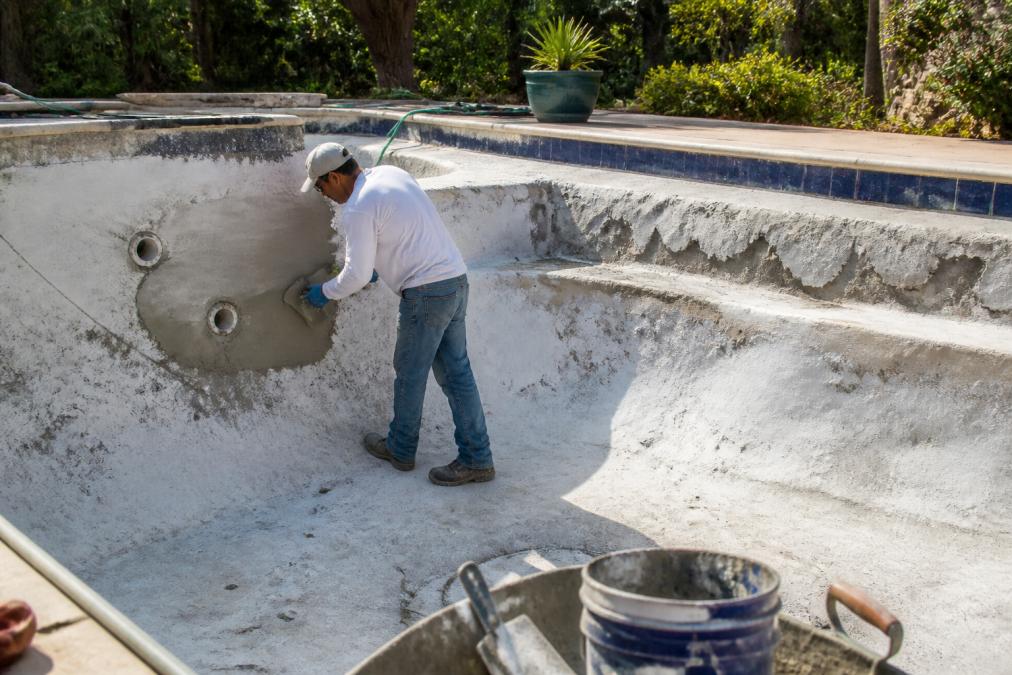
Last Updated: September 6, 2026
When your pool’s plaster starts cracking, staining, or shedding its surface layer, the natural instinct is to brace for a massive bill. The truth about the cost of pool plaster repair is more nuanced: it hinges on how much of the shell is actually compromised versus what needs a cosmetic refresh. At Blue Escapes Pool & Spa, with over 45 years of industry experience, the difference between a minor fix and a major renovation usually comes down to what’s beneath the surface you can see.
Pool plaster repair restores the interior finish of a gunite pool to protect the structural shell and restore watertight integrity. The total expense depends on your pool’s square footage, the finish material you select, and whether damage extends into the underlying concrete. Before you commit to a contractor, understand what drives those numbers, because the cheapest quote on paper often becomes the most expensive project in practice.
Below, we break down the factors that influence your final bill, compare repair against full replacement, and give you a realistic timeline for budgeting.
The single biggest cost driver is surface area. A standard residential pool measures roughly 400 to 800 square feet of interior surface, and most estimates are calculated per square foot (hse.gov.uk). Larger pools with deep ends require more material, labor, and time to drain, prep, and refill.
Your pool’s age and construction type also matter. Gunite pools are the most common in North Texas, and their service life depends heavily on original installation quality. The severity of the damage dictates whether you need a simple acid wash, a full replastering, or structural repair involving the pool shell itself.
Choosing between repairing existing plaster and replacing it entirely is the most consequential budget decision you’ll make. Repair is right when damage is localized, such as a few cracks or a single delaminated section. Replacement becomes necessary when plaster has reached the end of its service life, typically widespread cracking, etching, or rough spots that can’t be smoothed over.
A full replastering job involves removing the old surface through demolition, applying a new bond coat, and installing a fresh finish. It costs more upfront but extends the pool’s life by a decade or more. A patch repair might cost a fraction of that, but it only buys a few years before adjacent areas fail.
The deciding factor is the age and overall condition of your existing finish. If your plaster is over 10 years old and failing across multiple areas, replacement is almost always the more cost-effective path. Patching an aging surface is like putting a bandage on a wound that needs stitches.
|
Decision Factor |
Repair (Spot Fix) |
Full Replastering |
|---|---|---|
|
Damage scope |
Localized cracks or stains |
Widespread failure or etching |
|
Remaining finish life |
Under 5 years |
Finish at or past service life |
|
Cost impact |
Lower initial outlay |
Higher cost, longer durability |
|
Best for |
Recent damage, minor issues |
Pools over 10 years old |
Early detection of pool plaster failure can save you thousands, because small problems are far cheaper to address than structural ones. The most obvious sign is visible cracking. Hairline cracks along the pool floor may be cosmetic, but deeper cracks that follow the shell’s contour often indicate structural movement or hydrostatic pressure issues.
Rough, pitted surfaces are another warning. When plaster loses its smooth finish and feels like sandpaper, the surface layer is deteriorating, creating a cycle where rough plaster traps algae and minerals, accelerating further breakdown. Staining that won’t respond to chemical treatment often signals water has penetrated behind the plaster, compromising the bond coat.
White or gray patches that feel soft to the touch indicate the plaster has lost its structural integrity. If you notice any of these issues, schedule a professional inspection before the damage spreads; a diagnostic visit is minimal compared to a full structural repair.
The finish material you choose dramatically influences both the cost of pool plaster repair and how long the new surface will last. While the initial price tag is the most visible number, the true cost is best measured as a per-year figure, which accounts for the material’s lifespan and separates a budget choice from a value choice.
Here is how the primary finish categories stack up on cost and longevity, based on typical industry pricing for a standard 500-square-foot residential pool:
The key insight is that the ‘cheapest’ material is not always the most economical. A premium finish can sometimes offer better long-term value.
Beyond aggregate type, you will also encounter variations in the plaster mix itself. Some contractors use a higher ratio of white Portland cement, which can be more prone to chalking. Others may offer additives like polymers to improve bonding and flexibility, which can reduce cracking risk. Always ask your contractor for the specific mix design and the manufacturer’s warranty, as this is a key indicator of the finish’s expected performance.
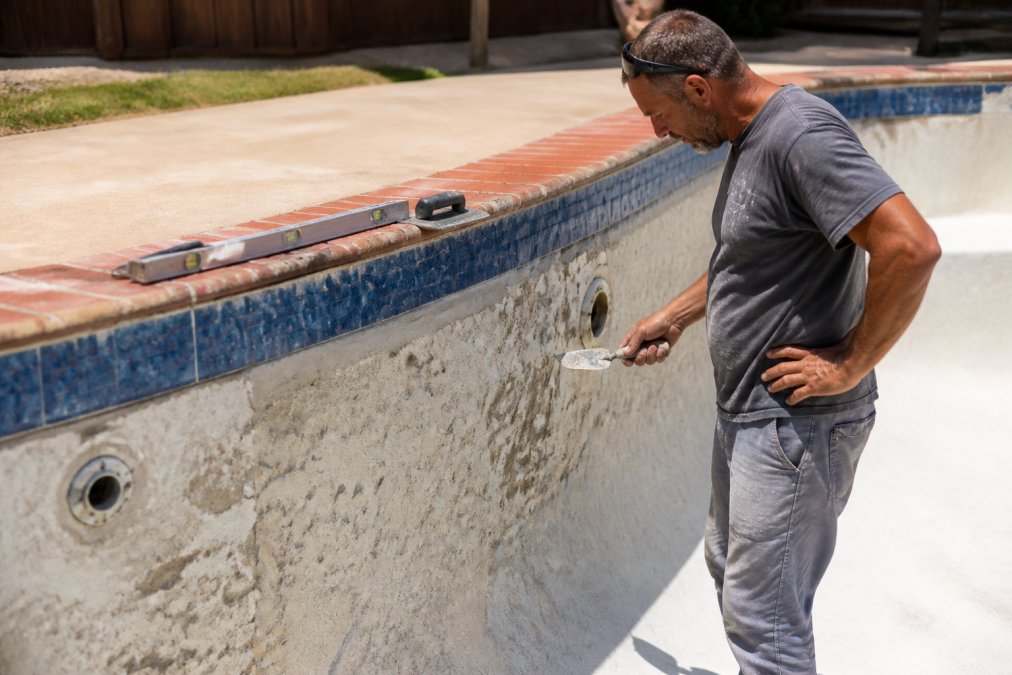
Labor rates account for roughly 50% to 60% of any replastering estimate, reflecting the skill required to apply a finish that remains watertight for a decade (pca.org). Surface preparation is where costs escalate: before new plaster can adhere, the old surface must be removed through demolition, or at minimum, acid washed and chipped, leaving the shell clean and free of oils, scale, and old bond coat.
The Hidden Cost Checklist
The most common reason a final bill exceeds the initial quote is the discovery of structural issues invisible until the pool is drained and the old plaster is stripped. Here is a checklist of items that can inflate a budget, and what you might expect for each:
The North Texas Factor
North Texas homeowners face a unique challenge: expansive clay soil that shifts with moisture levels, exerting immense pressure on a pool shell and causing structural cracks that no amount of plaster will fix. A thorough inspection must check for these issues before any finish is applied. If your pool is in an area with known soil issues, a contractor may recommend installing a ‘hydrostatic relief valve’ or addressing drainage to reduce soil pressure, a preventative cost that can save you from a catastrophic failure later.
A replastering job that skips essential steps like a proper bond coat or structural crack repair can lead to a finish that fails prematurely, costing more in the long run than a thorough job done right the first time. When comparing quotes, ask each contractor how they handle the items on this checklist, their answers will tell you more about the true cost than the bottom-line number.
Understanding the timeline for pool replastering helps you plan for the disruption and the associated costs of water, chemicals, and alternative arrangements. A standard residential replastering project typically takes 7 to 10 days from start to finish.
The process begins with draining the pool, which takes several hours. Demolition of the old plaster follows, usually consuming two to three days depending on the pool’s size and the condition of the existing finish. Surface preparation, including chipping, cleaning, and applying the bond coat, takes another one to two days.
The actual plaster application is a single-day event, but the curing process requires patience. New plaster must be kept moist and filled with water quickly to prevent cracking. The pool is typically ready for water within 24 hours, but the plaster continues to cure for the next 30 days, during which water chemistry must be carefully balanced to prevent scaling or staining.
The DIY route for pool plaster repair is tempting, and for minor cosmetic issues like small stains or hairline cracks, a homeowner with the right tools can manage a patch. However, replastering an entire pool requires specialized equipment, including grinders, sprayers, and a thorough understanding of the curing process.
The cost of renting equipment and purchasing materials can sometimes erase the labor savings. More importantly, a botched DIY job can damage the pool shell, void warranties, and create a surface that fails prematurely. The maintenance requirements for a newly plastered surface are exacting, and mistakes in the first 30 days can ruin the finish permanently.
Professional crews bring experience, proper surface preparation, and the ability to diagnose structural issues before they become catastrophic. For a job that protects a major investment like your pool, professional labor can help mitigate costly errors.
Getting an accurate quote for your pool plaster repair starts with a proper inspection, not a phone estimate. A qualified contractor should drain the pool, assess the surface condition, and check the structural integrity of the shell before committing to a price. At Blue Escapes Pool & Spa, our process includes a comprehensive evaluation covering the finish, tile, coping, and underlying structure, so there are no surprises when the work begins.
Our team, led by owner Bob Iovinelli with his CBP® and CSP® certifications, brings over 45 years of hands-on experience to every project. We’re A+ BBB-accredited and members of the Pool & Hot Tub Alliance, and we back our work with transparent online service reporting. When you request a quote, you’ll get a detailed breakdown of the scope, materials, and timeline, not a vague ballpark.
The cost of pool plaster repair is an investment in the longevity and safety of your backyard oasis. A proper finish protects the structural integrity of your pool, keeps water chemistry stable, and makes your pool a pleasure to use. Contact Blue Escapes Pool & Spa today to schedule an inspection and get an accurate quote for your project.
The real challenge with pool plaster repair isn’t finding a contractor; it’s finding one who will give you an honest assessment of what your pool actually needs. Many homeowners in North Texas discover that the cracks they see are just the surface of deeper structural issues caused by shifting clay soil. Blue Escapes Pool & Spa combines certified expertise with transparent reporting, so you’ll know exactly what your pool requires and why. Request a quote from Blue Escapes Pool & Spa and get a detailed, accurate plan for restoring your pool to its best condition.
Spot plaster repair targets isolated cracks or chips using a bond coat and fresh plaster, keeping the job small and fast. Full resurfacing removes the entire existing plaster layer, checks the structural integrity of the pool shell, and applies a new finish. Full resurfacing costs more but fixes widespread deterioration, extends service life, and lets you change the finish material entirely.
Most pool plaster repair projects require draining the pool below the damaged area, and full replastering typically means a complete drain. Draining exposes the pool shell for proper surface preparation and bond coat application. The job also requires managing hydrostatic pressure, so a professional should handle the draining process to prevent the shell from shifting or cracking.
Early spring or fall is the best time to schedule pool plaster repair in North Texas. Moderate temperatures are ideal for the curing process of new plaster, which needs consistent conditions to set properly. Scheduling in spring or fall also avoids peak-season wait times, meaning you get contractor quotes faster and your pool is ready before summer demand or winter weather arrives.
Standard white plaster, with proper pool maintenance and balanced water chemistry, can offer a good service life. Quartz aggregate and pebble finishes can extend that service life further. The lifespan depends on water chemistry management, especially avoiding acid washes that strip the finish, and addressing signs of pool plaster failure before they spread.


