

Last Updated: September 7, 2026
Most residential pools need professional service weekly during peak swimming season, with biweekly visits acceptable during cooler months or for lightly used pools at 80%-90% of the cost of weekly service (the CDC). That rhythm keeps water chemistry balanced, prevents algae, and protects equipment from strain. The question of how often to service pool water isn’t one-size-fits-all, but the default weekly schedule is the safest starting point for any in-ground pool.
A consistent schedule is preventative maintenance, not an optional luxury.
Weekly service is the industry standard because chlorine levels and pH balance drift noticeably within seven days, especially in warm weather. A weekly visit keeps sanitization consistent, reduces the risk of algae, and catches small issues before they become expensive repairs.
Biweekly service can work for pools that are covered, shaded, or used sparingly, but water clarity suffers and you’ll likely need stronger chemical adjustments to recover from the longer gap. Some homeowners switch to biweekly visits in winter when lower temperatures slow algae growth and chemical demand drops. However, the cost savings are only 10%-20% from most service providers
Your pool’s location, surrounding landscape, and usage all shift the ideal frequency. Pools under heavy tree cover collect leaves and organic matter that feed algae and consume chlorine faster than an open, sunny pool. High swimmer loads introduce contaminants that strain filtration and require more frequent chemical testing.
Most maintenance guides are generic, but your regional climate is arguably the single biggest factor in determining service frequency. Here’s how different US climates change the calculus.
Hot and Arid Climates (e.g., the Desert Southwest)
In regions like Phoenix or Las Vegas, intense UV radiation and high air temperatures destroy free chlorine in a matter of hours. Weekly service is often the absolute maximum, and many owners find twice-weekly service during June through August necessary to prevent algae. High evaporation rates can also drop water levels rapidly, causing the pump to run dry, so a professional must monitor and adjust water levels.
Hot and Humid Climates (e.g., the Southeast and Gulf Coast)
In states like Florida and Texas, heat and humidity breed algae and bacteria, while afternoon thunderstorms introduce debris and dilute chemical balance. A strict weekly schedule is non-negotiable during swim season. High humidity also causes calcium scaling on tile, requiring closer attention to calcium hardness and more frequent brushing.
Temperate Climates with Four Seasons (e.g., the Midwest and Northeast)
The schedule here is more dynamic. You can stretch to biweekly service in the cooler months of May and September, but must revert to weekly visits during heat waves. The biggest challenge is transition periods: fall leaf drop can overwhelm a pool in days, and the first weeks after spring opening often require more frequent visits to combat algae blooms.
Cool and Coastal Climates (e.g., the Pacific Northwest)
Pools in cooler, coastal areas like Seattle or San Francisco have lower chemical demand, so biweekly service is often sufficient for the entire swim season. However, frequent rain lowers pH and alkalinity and washes pollutants into the pool, so the schedule must account for rebalancing after significant rain events.
The type of pool you own also dictates service frequency in ways that generic guides ignore.
Saltwater vs. Traditional Chlorine Pools
Saltwater pools use a salt chlorine generator, but they are not chemical-free. You still need to test and balance the water weekly, and the salt cell requires regular inspection and cleaning. In hard water areas, calcium scale builds up on the cell plates, reducing efficiency and leading to low chlorine output. A professional service should check and clean the cell monthly or quarterly to prevent premature failure.
Concrete (Gunite/Plaster) vs. Fiberglass Pools
Concrete pools have a porous surface prone to algae and staining, requiring vigilant chemistry management to prevent etching or scaling, which necessitates a consistent weekly schedule. Fiberglass pools have a smooth, non-porous finish that resists algae and can tolerate biweekly service more readily, but they are more susceptible to damage from improper chemical levels, so consistent testing remains critical.
A pool that hosts a party every weekend has vastly different service requirements than one used by two people. High bather load introduces contaminants that quickly deplete chlorine and stress the filter. If your pool sees heavy use, expect to add a mid-week shock or enzyme treatment, and a professional can adjust your schedule and recommend a higher baseline chlorine level.
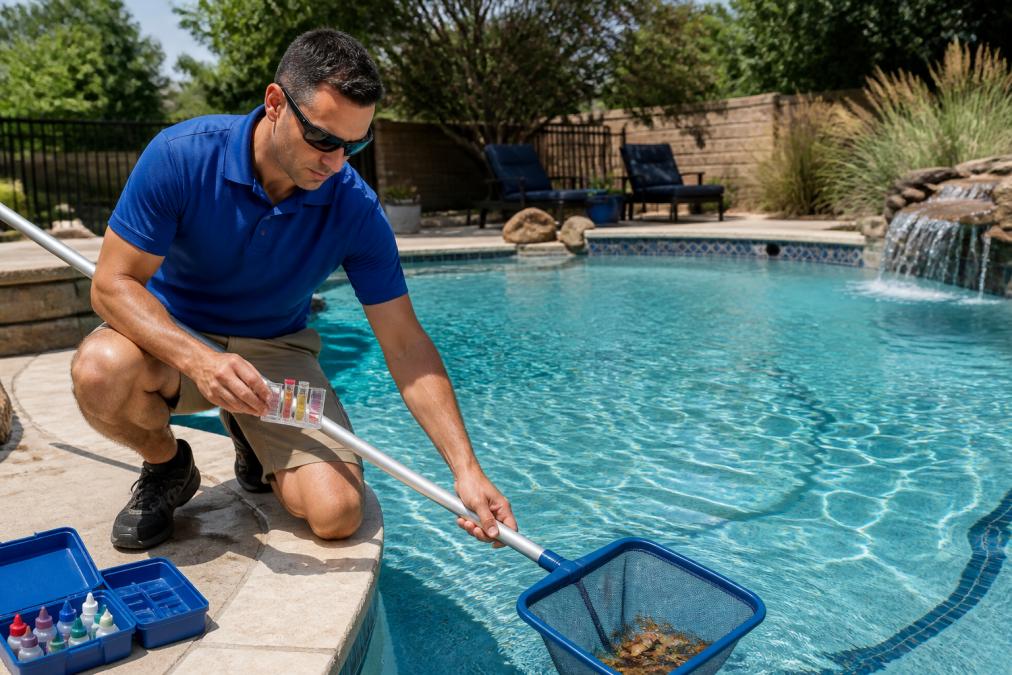
A reliable schedule pairs professional visits with simple tasks you handle yourself between them. The checklist below reflects what a thorough service should cover and what you can manage in a few minutes each week.
|
Frequency |
Tasks |
Notes |
|---|---|---|
|
Daily (2-3 min) |
Skim surface, empty baskets, check water level |
Prevents debris from sinking and straining the pump |
|
Weekly |
Test water, brush walls, vacuum, check filter pressure |
The core of algae prevention and water clarity |
|
Monthly |
Inspect equipment, clean skimmer baskets, check for leaks |
Catches small problems before they escalate |
|
Quarterly |
Deep clean filter, inspect seals and gaskets, shock treatment |
Keeps the filtration system running efficiently |
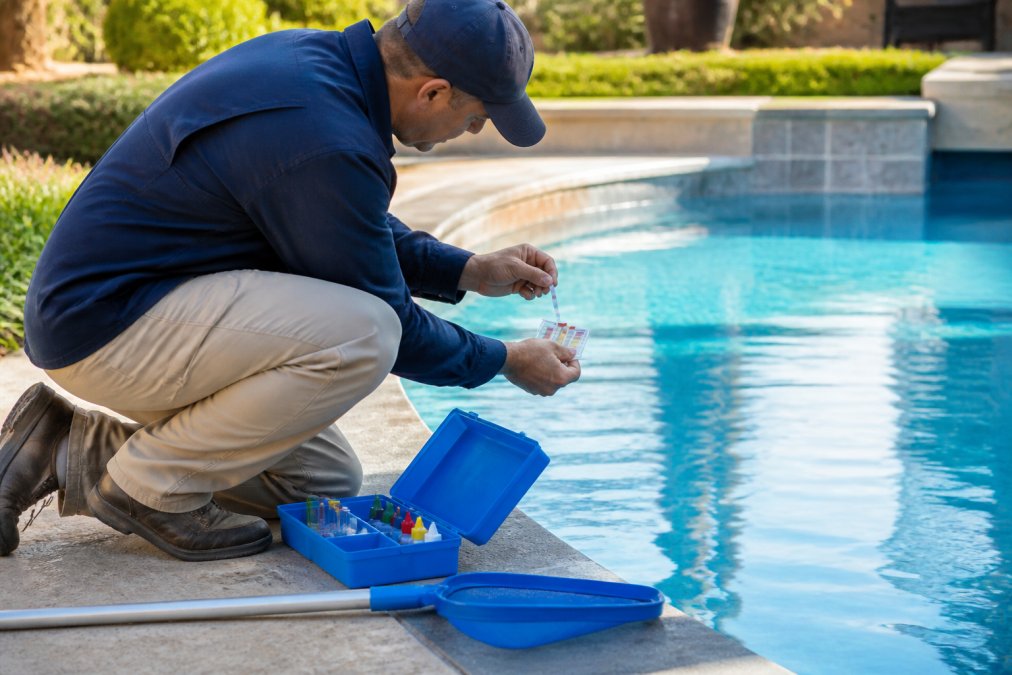
The weekly service is the most critical. A thorough visit includes a complete water test measuring free chlorine, pH, total alkalinity, calcium hardness, and cyanuric acid. Target ranges: free chlorine 1-3 ppm (or higher for saltwater), pH 7.4-7.6, total alkalinity 80-120 ppm, and calcium hardness 200-400 ppm (the CDC). The technician uses these results to make precise adjustments, not guesses.
Robotic cleaners and smart water monitors fundamentally change the maintenance equation. A robotic cleaner run daily reduces settled debris, allowing for a more efficient professional visit, but it does not mean you can skip a week.
Smart water monitors, like the Hayward AquaRite or Pentair IntelliCenter systems, continuously track pH and sanitizer levels and alert you when they drift out of range. If a heavy rainstorm dilutes your pool, a monitor can alert you within hours so you can add chemicals before algae gains a foothold, preventing an expensive “shock and recover” call. However, these monitors do not clean the pool or inspect equipment; you still need a professional to brush walls, check the pump and filter, and inspect for leaks.
If you need to shock your pool more than once a week or constantly battle cloudy water, your service frequency is not the problem, your water chemistry is. Link the symptom to the cause:
Your filter’s maintenance schedule depends on its type. Sand filters need backwashing when the pressure gauge reads 8-10 psi above the clean baseline, usually every few weeks during peak season. Cartridge filters require hosing down every two to four weeks and a deeper chemical soak a few times per year. DE filters need backwashing and fresh diatomaceous earth added periodically.
Filter cleaning frequency also depends on debris load. A pool under heavy tree cover clogs filters faster, so check pressure weekly and clean when needed. A neglected filter forces the pump to work harder, raises energy costs, and compromises circulation, directly impacting sanitization and algae prevention.
Routine maintenance handles chemistry and cleaning, but some issues signal deeper problems. Persistent algae that returns within days often points to poor circulation, a failing sanitizer, or phosphate buildup that shocking won’t fix. Cracks in the pool surface, loose tiles, or a rising water level when it hasn’t rained indicate structural issues that worsen with time.
Equipment problems are another category worth watching. A pump that runs but doesn’t circulate water, a heater that won’t hold temperature, or a filter that needs cleaning every few days all suggest underlying failures. If your water bill climbs without explanation, you may have a leak. These issues don’t resolve themselves, and delaying repair multiplies the cost.
Professional pool service costs more upfront than DIY, but the comparison changes when you factor in chemical waste, equipment repairs, and your own time. DIY owners still buy chemicals and parts, and risk misdiagnosing problems a trained technician would catch early.
A professional service provider follows a documented checklist, tests water properly, and catches small issues before they become emergencies. At Blue Escapes Pool & Spa, our technicians handle routine care from chemical balancing to equipment checks, documenting every visit with online service reporting. For complex problems, our owner holds CBP® and CSP® certifications, backed by over 45 years in the industry and an A+ BBB rating.
Pricing for professional service depends on your pool’s size, location, and the frequency you choose. Rather than guessing at numbers that vary by region and pool condition, request a quote from a local provider to see what fits your situation.
Consistency is the single biggest factor separating clear, healthy pools from chronic problem pools. A weekly schedule during swim season, biweekly in cooler months, and daily attention to skimming and water level will keep chemistry stable and equipment running efficiently. When you spot signs of structural damage, persistent algae, or equipment failure, don’t wait, early intervention is always cheaper than emergency repair.
A dependable maintenance routine protects your investment and keeps your pool ready whenever you are. If managing the schedule feels like a burden, professional service removes the guesswork. The Blue Escapes Pool & Spa team brings certified expertise and transparent reporting to every visit. Request a quote today and put your pool on a schedule that actually works.
Yes. Even when you are not swimming, a pool needs attention to prevent algae and equipment damage. During the off-season in North Texas, most pools do well with biweekly service instead of weekly visits. The pump still needs to run to circulate water. A professional can adjust chlorine and pH levels less frequently while checking for freeze damage or debris buildup. Skipping winter service entirely often leads to a green pool and costly repairs when the season starts again.
The three C’s are circulation, cleaning, and chemistry. Circulation means running the pump long enough each day to filter the full volume of water. Cleaning covers skimming, brushing walls, and vacuuming to remove debris and prevent algae. Chemistry refers to testing and balancing chlorine levels, pH balance, and total alkalinity. A service professional handles all three on a weekly or biweekly schedule so that small issues never escalate into structural damage or unsafe water.
A pool can go about one to two weeks without cleaning before water quality drops noticeably. After two weeks, debris accumulates, chlorine levels can fall to zero, and algae begins to form on surfaces. In hot weather, the timeline shortens. Pools with heavy use or lots of nearby trees need weekly maintenance. If you plan to skip a week, run the pump longer and add extra chlorine before you leave. Beyond a month of neglect, expect a green pool and potential filter strain.


